The Role of Tiered Access Levels in Shaping Tournament Entry Patterns Across Digital Platforms
Yves Powell · Jun 15, 2026
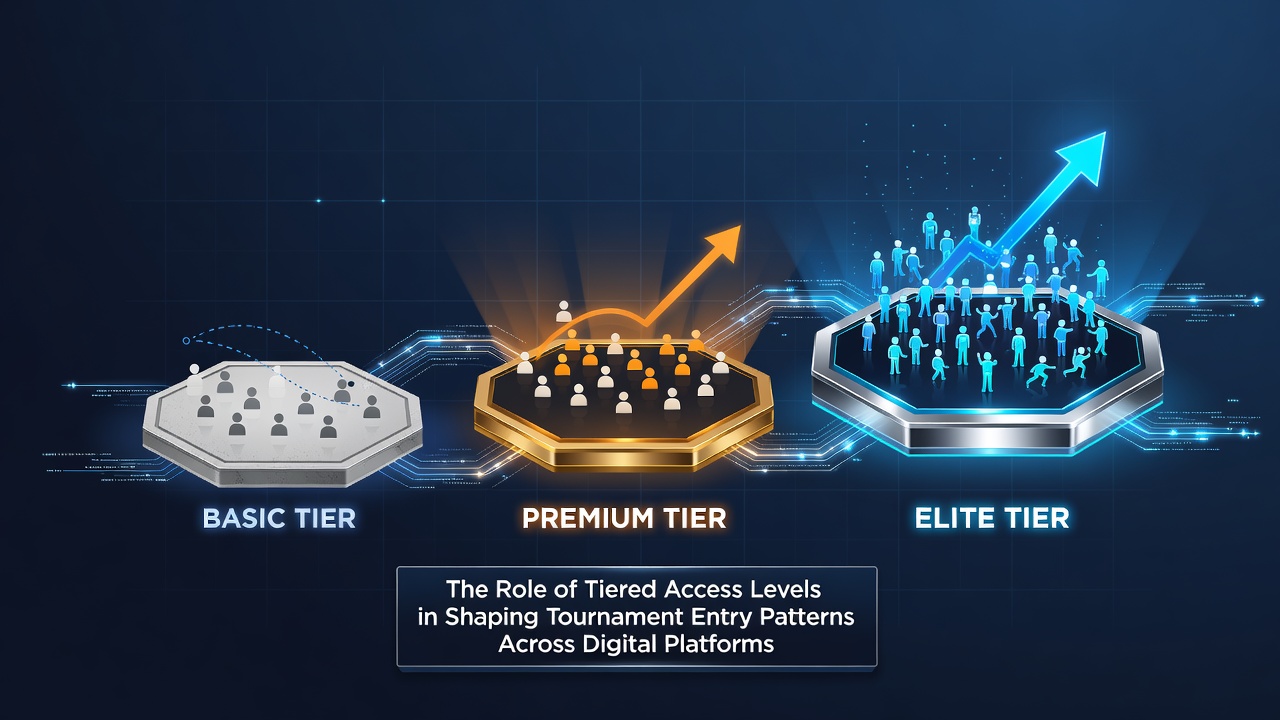
The Role of Tiered Access Levels in Shaping Tournament Entry Patterns Across Digital Platforms
Digital platforms have implemented tiered access systems to organize user participation in competitive tournaments, with entry patterns varying significantly based on subscription levels, achievement milestones, and verification status. Researchers tracking these systems across gaming networks report that premium tiers often correlate with higher entry volumes during peak periods, while free tiers show more selective participation tied to specific event types. Data from industry monitoring indicates that platforms adjust tier requirements periodically to balance competition density and user retention across regions.
Defining Tier Structures in Tournament Ecosystems
Platforms categorize users into multiple access brackets that determine eligibility for events, with entry requirements ranging from basic account verification at the lowest level to advanced performance metrics and payment commitments at higher brackets. Observers note that these structures emerged as platforms scaled their competitive offerings in the mid-2020s, allowing organizers to segment participants according to commitment signals. Studies from academic institutions have documented how such segmentation influences the distribution of skill levels within individual tournaments, creating more predictable matchmaking pools at each tier.
Entry patterns shift when platforms introduce new tier thresholds, with data revealing spikes in qualification attempts among mid-level users seeking to unlock additional events. Those who have examined platform logs across multiple services find that users in elevated tiers enter tournaments at rates three to four times higher than base-level participants during standard monthly cycles. This difference holds steady across both regional and global competitions hosted on major networks.
Observed Entry Behaviors by Access Level
Analysis of tournament registration data shows distinct behavioral clusters, where lower-tier users concentrate entries during promotional windows or lower-stakes events, whereas higher-tier participants maintain consistent entry rates regardless of external incentives. Figures from platform reports compiled through 2025 and into June 2026 demonstrate that elite-tier users account for approximately 35 percent of total tournament entries despite representing under 10 percent of registered accounts. These patterns appear across mobile, desktop, and console-based platforms operating in North America, Europe, and Asia-Pacific markets.
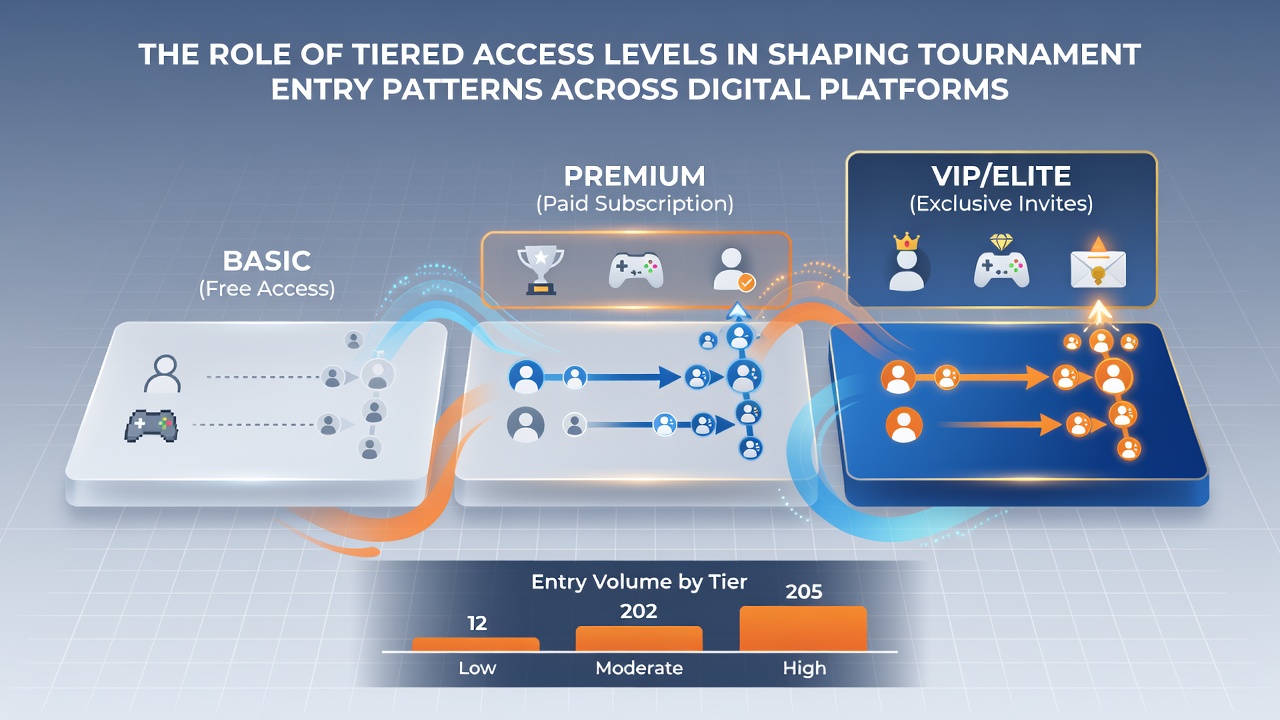
External factors such as seasonal schedules and regional regulations further modulate these behaviors, with entry volumes in higher tiers remaining stable during periods when base-tier participation fluctuates. Research conducted by groups affiliated with the Interactive Games and Entertainment Association in Australia has tracked how tier-specific leaderboards and qualification paths affect long-term engagement, showing sustained activity among users who progress through multiple access brackets over six-month intervals.
Platform Adjustments and Resulting Shifts
Operators have responded to observed entry imbalances by refining tier criteria, including adjustments to minimum playtime requirements and integration of cross-platform progression systems. According to reports issued by the Entertainment Software Association, several major services revised their access frameworks in early 2026, resulting in measurable redistribution of entries toward previously underrepresented tiers. These modifications often involve introducing hybrid pathways that allow base users limited access to select events while reserving premium brackets for consistent high performers.
One documented case involved a European platform that lowered certain verification hurdles for mid-tier advancement, after which registration data showed a 22 percent increase in entries from that segment within the following quarter. Such changes illustrate how tier design directly influences participation distribution without altering overall tournament capacity.
Data Sources Informing Tier Policies
Platform administrators rely on aggregated registration metrics, retention curves, and demographic breakdowns to calibrate access levels, with inputs drawn from internal analytics teams and third-party research partners. A study released by researchers at the University of Waterloo in Canada examined entry patterns across five major digital competition services, finding strong correlations between tier duration and repeat participation rates. These findings have informed subsequent policy tweaks on multiple networks operating in similar regulatory environments.
Additional context comes from reports issued by bodies such as the Malta Gaming Authority, which monitor how access structures interact with broader digital competition frameworks in licensed jurisdictions. Patterns identified in these datasets continue to guide platform decisions on tier expansion and event scheduling through mid-2026.
Conclusion
Tiered access systems continue to shape tournament ecosystems by channeling participation according to user status and platform-defined criteria, with entry patterns reflecting the cumulative effects of eligibility rules and progression incentives. Ongoing data collection across services provides operators with the information needed to refine these structures in response to evolving user behaviors and regulatory landscapes.